For anyone living in the Midwest, late summer is always a great time of the year. Sure, the sun has begun its annual migration to the south and the days are getting progressively shorter. Unfortunately, the number of swimming pool days is decreasing rapidly. So, I decided to visit Garfield Farm Museum in La Fox!
(This page may contain affiliate links. See our disclosure about affiliate links.)
The Fruits of Our Labors
But the vegetables that we have planted and fertilized and watered and tended for the last three months… are finally ripening.
The fruits, quite literally, of our labors are available for the table. Oh, I know, the modern world has ensured that most of what we eat – especially the fruits and vegetables – is available all year long.
Talk to Someone Who Lives on a Farm
We get fresh produce from all over the globe; it’s available from the local supermarket at any time. But there is nothing quite like the flavors of those things grown right in our own backyards: the peppers, beans, zucchini, squash, and tomatoes. But have you ever stopped to wonder… is this what our vegetables really are supposed to taste like?
If that sounds like a strange question, talk to someone who lives on a farm about the difference in flavor between fresh farm produce and that purchased at the store Keep in mind that today’s products have been hybridized to the nth degree for profitability and not necessarily flavor.
Better yet, take the opportunity to visit a farm. Not just any farm though, visit one that is a working model of an 1840’s farm. The Garfield Farm Inn and Museum, just 3 miles west of Randall Road and a half-mile north of Route 38, is one such example.
Timothy and Harriet Garfield from Vermont
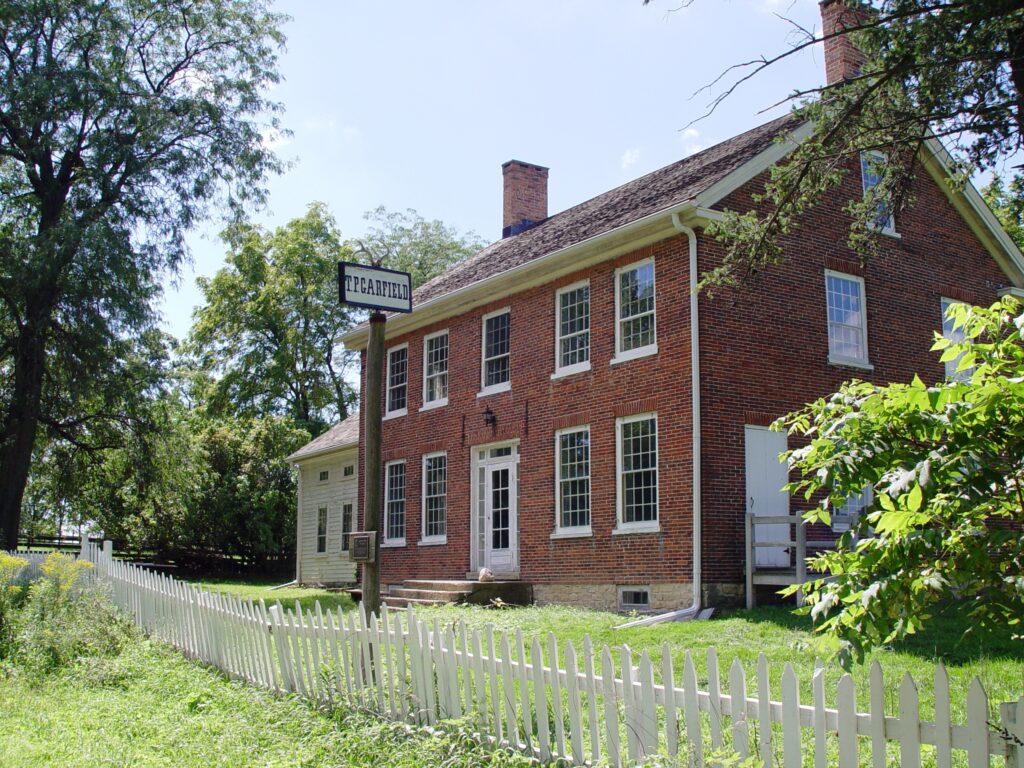
The farm started from a simple log house, built in 1836 by Sam Culverson. I was told that Sam was a squatter and was looking to sell the property and make some money. Timothy and Harriet Garfield had arrived in the area from Vermont, looking for a place to homestead and purchased the house and about ninety acres of land at what was then the junction of several roads connecting Chicago, St. Charles, Sycamore and Rockford.
A Brick Building in 1846
It was a convenient rest-stop for weary travelers and served as a sort of hotel and tavern until it got too small. Bricks made from local clay were used to construct a brick building in 1846 and the farm and tavern was quite the busy place… at least until the westward expansion of the railroads, which pretty much put an end to the inn business. But by then, the farm had become successful and was able to support the family.
Thanks to the hard work, donations and volunteer work of many, the farm opened as a living history museum in 1977, and the restoration of buildings and acquisition of additional land – the farm is now close to 400 acres in size – ensures that Garfield Farm Tavern Museum will continue to thrive.
Clear Picture Life in the 1840’s
The best part is that this farm offers a clear picture of what life in the 1840’s was like. Think clothes, farming methods, and the true natural prairie environment experienced by the Garfield’s when they first came to Illinois.
There are numerous events throughout the year (e.g., over a dozen in 2007) at the farm that highlight:
- antique and vintage tools,
- rare breed livestock,
- wetlands management, and
- garden products and seeds.
Prairie walks are conducted monthly and there are many educational seminars and entertainment events available for the whole family.
Marvelous Experience
I had the opportunity to visit the farm during one such event — the 18th Annual Heirloom Garden Show – in August, and it was not only an eye opener but a marvelous experience. I say that because it relates directly to my opening statements regarding fresh produce and the hybridization of food products.
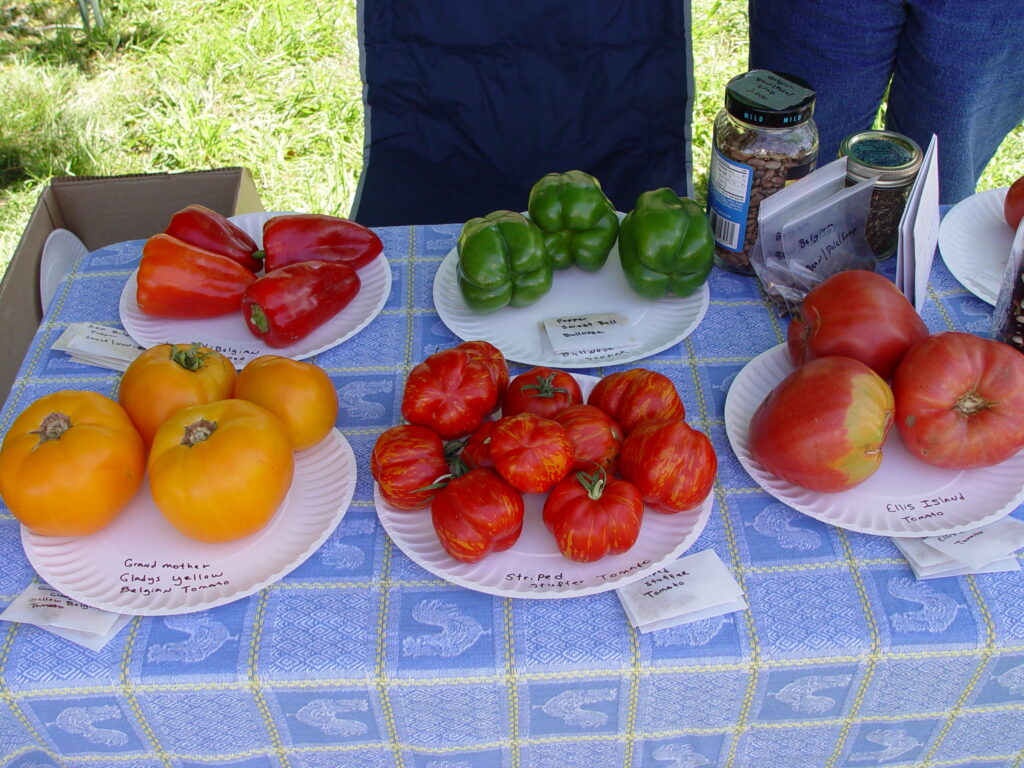
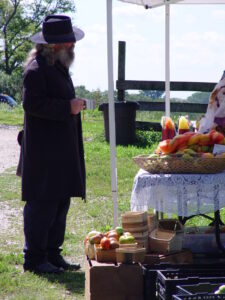
Here at the Heirloom Garden Show was an incredible variety of vintage vegetables, fruits, herbs, and antique flowers on display. Some of these were offered for tasting and for sale by gardeners from the Great Lakes region.
Seeds of Plants from the 1840’s Era
When I say vintage, I mean that all of the items there are from the seeds of plants from the 1840’s era… or earlier.
I saw corn plants that were over ten feet tall, strangely colored bean seeds, hundreds of pepper varieties and tomatoes of every conceivable size, shape, and color. Each displayed their own distinct traits.
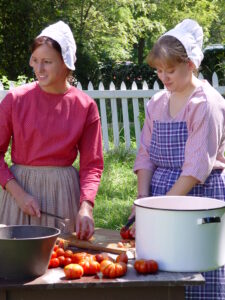
There were flowers I had never seen or heard of before. Many Garfield Farm volunteers were dressed in clothes of the period and doing various chores. One pair of girls were cutting tomatoes and preparing to make catsup the old-fashioned way. Other volunteers acted as docents and explained/described the vegetable and flower gardens and history of the farm.
Locally Grown
I also discovered two remarkably interesting items of which I was totally unaware. The first was the Heritage Prairie Market and Education Center, located just outside Geneva, two miles west of Randall Road at Route 38. This is a wonderful place to pick fresh herbs or shop for locally grown products. And the Center is also a wonderful place to learn about the important connection between us and nature.
There is a vast variety of fresh fruit and produce. The majority of that fruit and produce was from right here in Kane County. There were lots of fun things to see! I also learned about the Seed Savers Exchange. From their website:
“Seed Savers Exchange is a nonprofit organization that saves and shares the heirloom seeds of our garden heritage, forming a living legacy that can be passed down through generations. When people grow and save seeds, they join an ancient tradition as stewards, nurturing our diverse, fragile, genetic and cultural heritage.”
Maintaining Biodiversity
Both the Heritage Prairie Market and the Seed Savers Exchange emphasize one of the most important aspects of maintaining a healthy planet: biodiversity. My visit to Garfield Farm served to pique my interest in maintaining that diversity in both our cultural heritage and our floral heritage.
While we can sometimes only look at pictures and implements of an earlier time, we have the opportunity – perhaps even an obligation – to partake in the harvest of vintage plants grown from the seeds of still vibrant and genetically diverse ancestors.
We can also participate in the collection and preservation of seeds from those very plants, thereby insuring the maintenance of that marvelous diversity. And besides, once you taste the produce from heirloom seeds, it may just be the only kind of produce you will want. But don’t take my word for it, go see for yourself. All of these good things from nature are right around the corner!
Additional Resources, Links and Products
- Open Seed Vault 15,000 Non GMO Heirloom Vegetable Seeds for Planting Vegetables and Fruits -32 Variety Pack (Amazon.com)
- Crockett’s Victory Garden – companion to the PBS series (Amazon book)
- Log Cabin Cooking: Pioneer Recipes & Food Lore (Amazon book)